

Why Factories Are Switching to VRC Lifts, and What You Gain
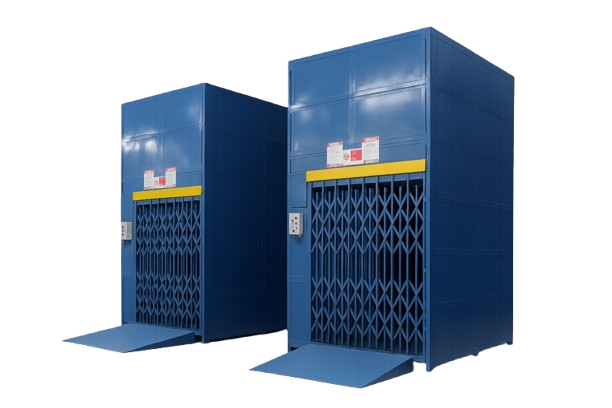
A vertical reciprocating conveyor moves material between floors on a fixed vertical path, without the ramps, ancillary structure, or licensing requirements a passenger-rated lift carries. For a factory or warehouse moving goods rather than people, that difference changes the layout, the labour, and the cost of every floor-to-floor transfer.
The Space A Ramp or Stairwell Was Costing You
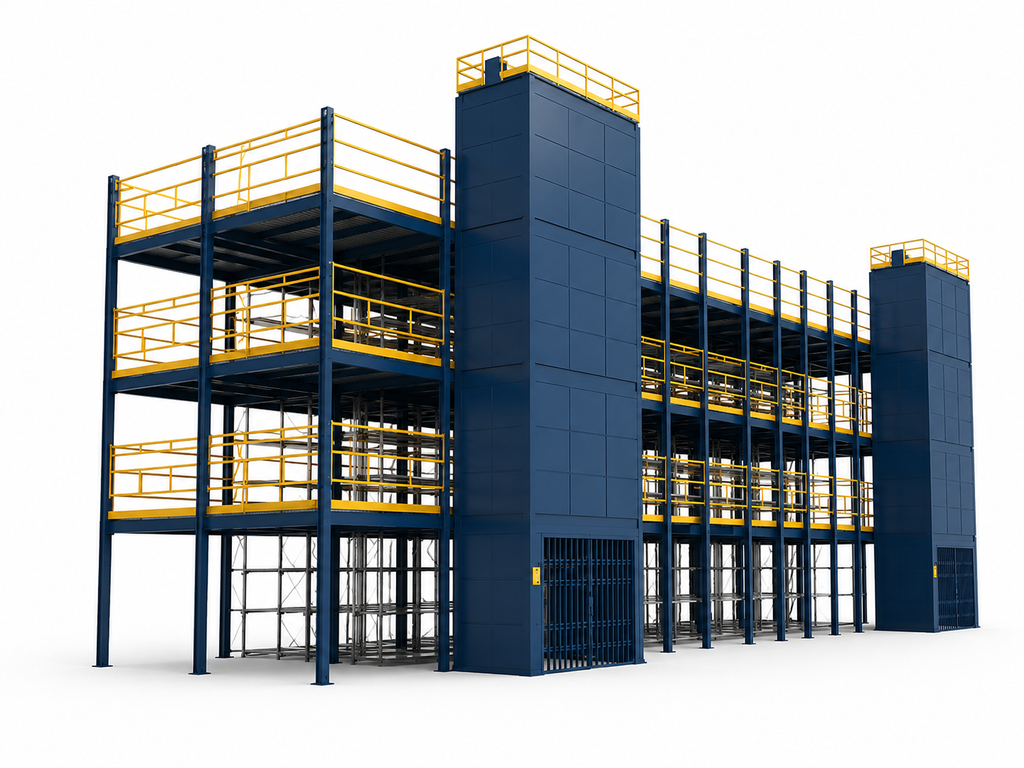
Ramps and stair access for manual floor-to-floor movement consume floor area that could otherwise hold racking, a workstation, or a production line. A VRC needs only its shaft footprint, since it moves material straight up rather than along a graded incline. Facilities that switch usually recover the ramp’s footprint entirely and put it back into productive use, which matters most in older buildings where floor space was never designed around modern throughput needs. Technovision Engineers Private Limited engineers its VRC platforms around exactly that recovery.
What Changes for Your Labour and Cycle Times
Manual floor-to-floor transfer means a worker carries or wheels material to a stairwell, moves it up or down by hand or trolley, then carries it back into position on the other side. Each of those steps is time a VRC removes: material loads once, moves on a fixed vertical path, and unloads once on arrival. Technovision’s VRC installations are engineered around that specific transfer, not adapted from general lift design, so the load and unload points integrate directly with the floor layout on either side rather than requiring extra handling to bridge the gap.
Where Safety Actually Improves
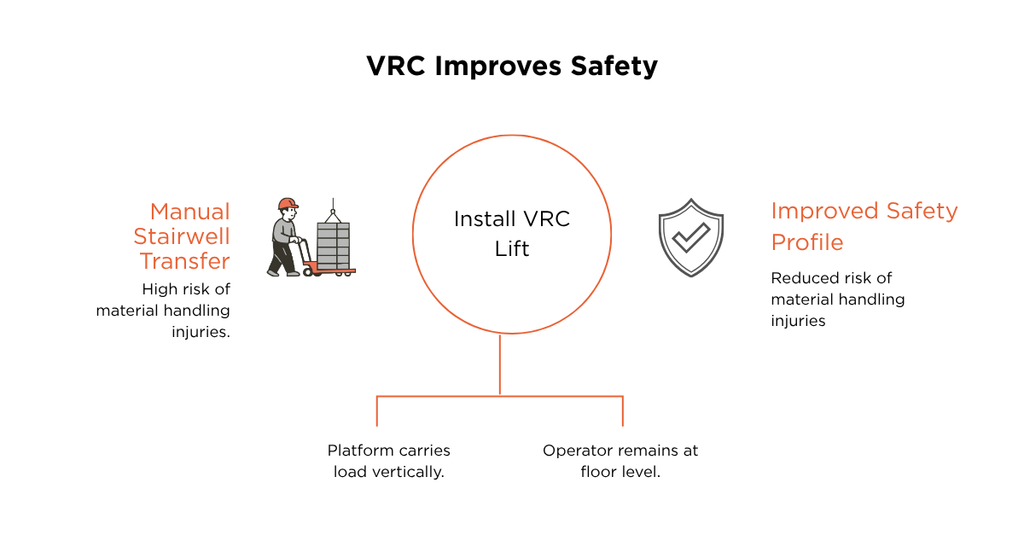
Manual stairwell transfer is where a large share of material handling injuries happen, particularly with heavier loads or repeated trips over a shift. A VRC removes the worker from the vertical transfer entirely, since the platform carries the load while the operator stays at floor level. This changes the safety profile of the transfer itself, not just the speed of it, which is why VRC installations are often justified on safety grounds even in facilities where the labour savings alone would not cover the cost.
Proof This Holds Up at Scale
Technovision Engineers has completed over 1,000 VRC installations across India since 2014, across automotive, electronics, warehousing, and pharmaceutical facilities. That volume means the engineering behind each installation is not a one-off design exercise. It reflects a system refined across a wide range of load requirements, floor heights, and facility layouts, which is what lets a VRC get specified to a plant’s actual operation rather than fitted it after the fact.
What Buying One Actually Involves
A VRC is specified around your load weight, cycle frequency, and floor-to-floor height. That means the conversation starts with your actual transfer requirement, not a spec sheet you have to fit yourself into. Technovision Engineers Private Limited designs and manufactures each VRC to that requirement at its Pune facility, from initial load assessment through installation.
Contact us to know more:
Phone: +91 7774020056 Email: sales@technovisionengrs.com
Website: www.technovisionengrs.com
Tags: VRC, VRC Lift, Vertical Reciprocating Conveyor, Industrial Lift, Industrial Goods Lift, Goods Lift, Industrial Elevator, Goods Elevator, Electro Mechanical Goods Lift, Chain Drive Factory Lift, Warehouse Lift, Heavy Duty Industrial Lift, Customized Industrial Lift, Industrial Material Lift, Vertical Lift, Warehouse Material Handling, Industrial Material Handling Lift