

Mezzanine Lift: Built on 1000+ VRC Installations
A Mezzanine floor solves a real problem cheaply: it adds usable space to a facility without the cost of a new building. What it also creates, almost immediately, is a new problem. Someone now has to move pallets, cartons, and components between the ground floor and that Mezzanine level, and doing it by hand, up a ramp or a staircase, is slow, unsafe, and eventually the bottleneck that undoes the space you just gained.
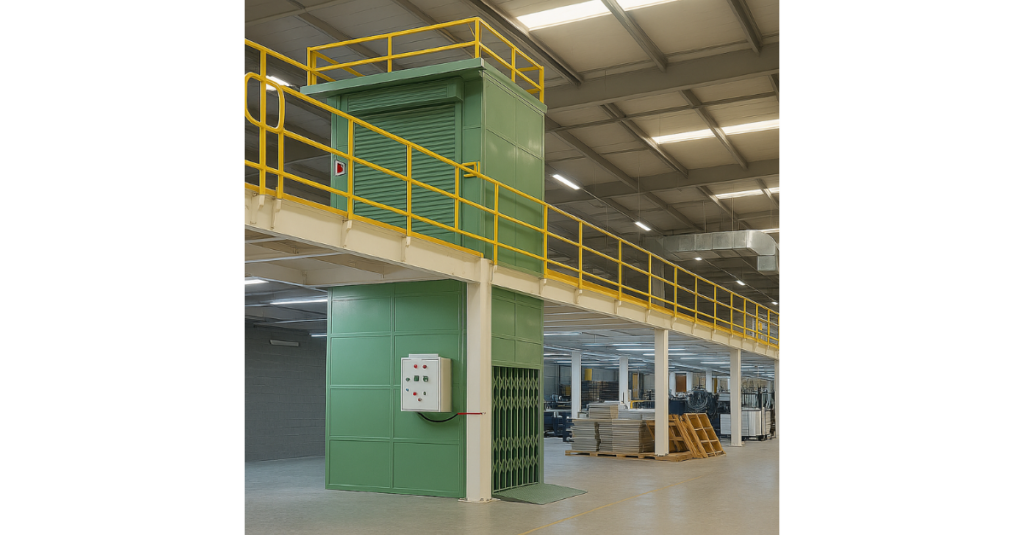
A Mezzanine lift is what handles that gap between floors. Getting the right one, and understanding what you’re buying, matters more than most buyers realize until after installation.
What a Mezzanine lift is
A Mezzanine lift, also called a Mezzanine floor lift or Vertical Mezzanine lift, is a self-supported, free standing lift structure built to move goods and materials between a ground floor and a Mezzanine level. It is the same vertical reciprocating conveyor engineering used across our full VRC range, sold and configured for a single floor to floor travel height rather than a multi floor run. The engineering, drive mechanism, and safety systems are identical to what goes into a standard VRC installation.
The structure itself is a modular MS tubular frame with vertical H-beams and T-guides, with the carriage built from MS fabrication, a checkered platform and perforated MS sheet enclosure on the non-operating sides. Movement is driven by a fail-safe motor and speed reduction gearbox through a chain, the same reliable drive system used across VRC installations generally.
Load capacity and specifications worth checking
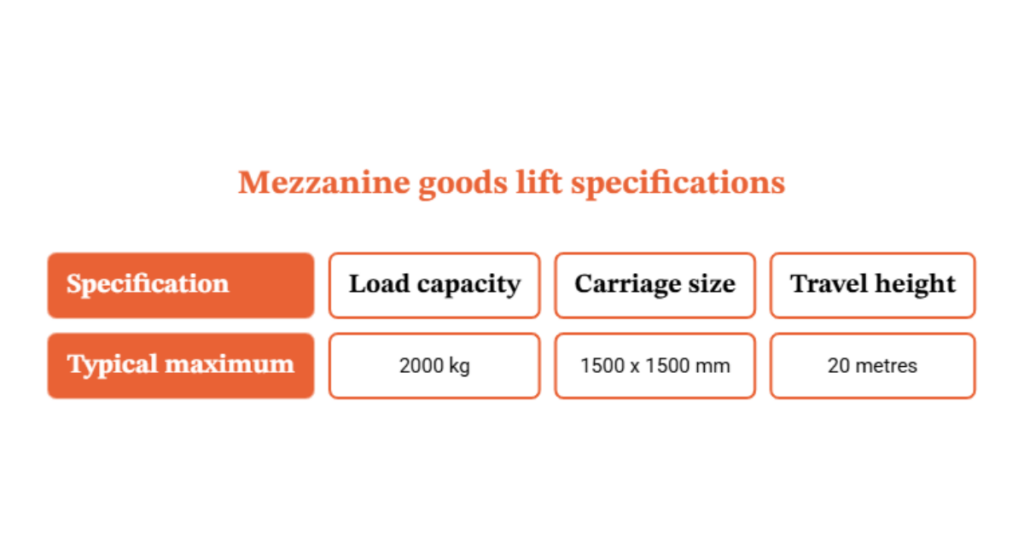
A Mezzanine lift needs to match your actual load profile, not a generic industrial rating. Capacity typically runs up to 2000 kg, with carriage sizes up to roughly 1500 x 1500 mm and travel heights up to about 20 metres for standard Mezzanine configurations. Every Mezzanine lift we build is customized around the site conditions and the customer’s actual load, rather than fitted to a fixed spec.
Safety features that should not be optional
Because a Mezzanine lift operates between a guarded floor opening and a ground floor landing, both fitted with interlocked doors, safety matters more here than on an enclosed shaft installation. Look for spring loaded safety cams to arrest a sudden fall, a bottom limit switch to prevent floor impact, a chain tensioner limit switch for chain displacement, and a top counterweight limit switch to cut power overrun. Landing doors should be interlocked, with a common contactor to cut power if the up or down contactor fails.
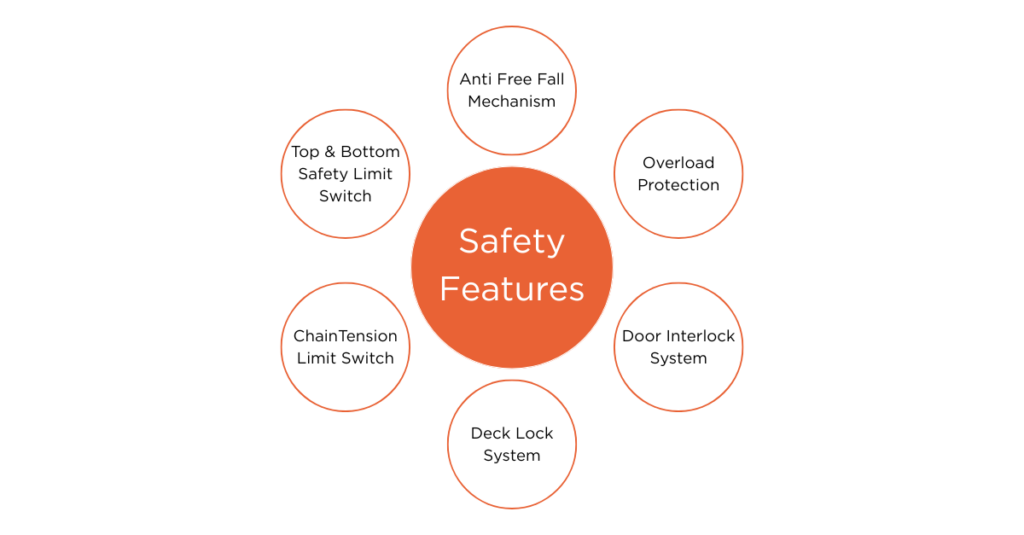
These are not premium add-ons on a well built Mezzanine lift. They are the mechanisms that determine whether a chain failure or a limit switch fault is a maintenance event or a serious accident.
Why the underlying VRC engineering matters
A Mezzanine lift is not a separate product line running on separate engineering. It is the same VRC, the same drive system, the same chain and sprocket movement, the same safety interlocks, configured for a single floor to floor lift instead of a multi floor run. This is where track record actually tells you something concrete: at Technovision Engineers Private Limited, every Mezzanine lift we build carries the same engineering behind more than 1000 VRC installations completed across India since 2014, covering a wide range of load capacities, travel heights, and site conditions. That is a decade of specifying, engineering, and troubleshooting vertical material movement, not a separate product built from a general fabrication background.
We are an ISO 9001:2015 certified manufacturer, and every Mezzanine lift we build is custom engineered around the client’s actual platform size, load capacity, lift height, number of stops, and site layout, rather than adapted from a fixed catalogue model.
Where Mezzanine lifts get used
Warehouses and storage facilities use them to move pallets and inventory between ground level operations and Mezzanine storage. Manufacturing plants use them to move raw materials, work in progress, and finished goods between production levels. Automotive facilities move parts, assemblies, and tools between shop floor levels. Logistics and distribution centers use them for order flow between warehouse levels, and FMCG and packaging operations use them to keep packaged goods moving between production and storage floors.
The common thread is the same one that applies to any vertical material handling decision: a Mezzanine lift earns its cost back through reduced manual handling, safer material movement, and space that a facility can actually use at the rate it was designed to be used.
What to confirm before you buy
Get four things right before finalising a Mezzanine lift order:
- Load Capacity: Check against your peak load, not just the average.
- Carriage Size: Ensure it fits your largest regular item.
- Travel Height: Confirm against the actual floor‑to‑Mezzanine distance.
- Manufacturer Expertise: Choose a supplier with proven engineering experience across VRC and Mezzanine installations, not just a catalogue photo.
A Mezzanine lift is a long term fixture once it’s installed. Getting the specification right at the start is considerably cheaper than retrofitting it later.
Contact us to know more: Phone: +91 7774020056
Email: sales@technovisionengrs.com Website: www.technovisionengrs.com
Tags: Mezzanine Lift, Mezzanine Floor Goods Lift, Mezzanine Floor Lift, Vertical Reciprocating Conveyor, VRC, Industrial Goods Lift, Goods Lift, Material Handling Equipment, Warehouse Automation, Mezzanine Lift Manufacturer, VRC Goods Lift, Industrial Material Lift, Mezzanine Vertical Lift, Vertical Mezzanine lift, Vertical Goods lift, Mezzanine Goods Lift Supplier, Mezzanine Goods Lift Manufacturers